
Life Science and EnvironmentTrending Career Blogs...
Read More
 Skip to content
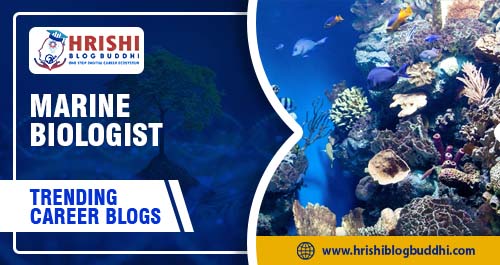
If you’re wondering how to become a Marine Biologist, the first step is understanding what marine biology entails. The study of all marine creatures, from planktons and bacteria to plants and animals, is known as marine biology. Marine biologists study the behavior of marine creatures and how they interact with their surroundings. Pathology, biochemistry, ecology, ocean farming, anatomy, development, reproduction, and conservation are all topics in marine biology. This training is excellent for those who can work long hours and are interested in learning how to become a Marine Biologist.
Marine biology offers a diverse range of employment opportunities. For students with a scientific background, marine science is a popular research option. Because of its distinctiveness, it has acquired a lot of traction in India as a Biology course and research program. If you’re considering how to become a Marine Biologist, this field could be an excellent fit for you.
After graduating with a degree in marine biology, you can select from a wide range of career opportunities. The field of marine biology is vast, and students will find something to their liking. After marine biology, ocean engineering is believed to be the highest-paying career. So, if you’re thinking about how to become a Marine Biologist, these are some factors to consider.
Stream | Graduation | Post-graduation | Ph.D. |
Candidates must have completed and passed a recognized class 12 examination to begin. | Candidates must now possess a Marine Biologist’s bachelor’s degree, such as a B.Sc. | Candidates may also pursue a postgraduate degree to get further knowledge in the field. | If interested, candidates can pursue a Ph.D. in Marine Biology. |
To get into college, the candidate should aim for a score of at least 50-60%. | Individuals should work to attain a high GPA to gain admission to a good PG college or placement. | To be admitted into a good Ph.D. college or placement, the candidate must maintain a high GPA. | To get a job, the individual should try to keep a decent GPA. |
Now the candidates can study biology in class 12. After that, they can enroll in an undergraduate course. | If students choose, they can enroll in B.Sc. Aquaculture/ B.Sc. in Life Science programs. After that, they’ll be able to apply for a postgraduate degree. | They can pursue M.Sc. in Marine Biology. | They can pursue a Ph.D. in Marine Biology. |
Marine Biology Courses in India-
Undergraduate courses | Postgraduate courses | Ph.D. |
B.Sc. in Aquaculture | M.Sc. in Marine Biology | Ph.D. in Marine Biology |
B.Sc. in Life Science | — | — |
Course Highlights-
B.Sc. in Aquaculture –
Course Name | Bachelor of Science in Aquaculture |
Degree Level | Undergraduate |
Duration | 3 years |
Examination Type | Semester system |
Minimum Qualification | Completed class 12th with Science or biology |
Admission process | Entrance or merit-based |
Recruiting area | Marine Product Export Development Authority (MPEDA), Export Inspection Agency ( EIA), Indian National Centre for Ocean and Information Services(INCOIS), Hyderabad. |
M.Sc. in Marine Biology-
Course Name | Master of Science in Marine Biology |
Degree Level | Postgraduate |
Duration | 2 years |
Minimum Qualification | B.Sc. in Aquaculture or B.Sc. in Life science |
Examination Type | Semester system |
Admission process | Entrance or merit-based |
Ph.D. in Marine Biology-
Course Name | Ph.D. in Marine Biology |
Degree Level | Doctorate |
Duration | 3 – 4Years |
Minimum Qualification | Post-graduation in Marine Biology |
Examination Type | Semester System |
Admission process | Based on shortlisted candidates’ performance in the round of interviews. |
Employment sector | Laboratories, Research Laboratories, Colleges, Universities, Marine Firms, and Research Firms, etc. |
College name | Location |
National Institute of Oceanography | Goa |
Annamalai University | Tamil Nadu |
Pondicherry University | Pondicherry |
Indian Maritime University | Coimbatore |
University of Madras | Chennai |
Andhra University | Visakhapatnam |
Goa University | Goa |
Cochin University of Science and Technology | Kochi |
Shivaji University | Maharashtra |
Bharathidasan University | Tiruchirappalli |
Internships for Marine Biologists-
Internships and volunteer opportunities in research are excellent ways to get experience. Many students dream of studying marine biology and marine animals, but when they are introduced to the day-to-day life of a marine scientist, they discover that it is not for them. Internships allow students to help graduate students, postdocs, or researchers with data gathering and analysis. It’s an excellent chance to learn about computer programming and other lab equipment.
Internships are advantageous because they provide students with hands-on experience working with businesses and organizations in their fields of interest. Someone with internships and experience has a far better chance of being recruited than someone with a simple CV and no experience. Internships can assist a person in pursuing a career in the field of Marine Biology by giving hands-on experience.
Exam name | Conducting Body | Level of exam | Mode of exam |
CSIR NET (Council of Scientific and Industrial Research – National Eligibility Test) | National Testing Agency | National Level | Online i.e. Computer-based Test (CBT) |
AURCET ( Andhra University Research Common Entrance Test ) | Andhra University (AU) | State Level | Offline (pen-paper test) |
Job name | Job description |
Marine Biologist | They study and investigate a variety of marine animals, plants, microscopic invertebrates, corals, and other microbes that live in the ocean. To contribute to Marine Science, they research their habits, life cycles, and other crucial factors. |
Marine Illustrator | They create visual representations of marine science and biology for a variety of reasons. They must draw and create charts, diagrams, and illustrations of various marine animals, plants, creatures, and microorganisms. |
Fisheries Biologist | A Fisheries Biologist examines aquatic ecosystems to learn about population dynamics and their effects. Recognize different species of fish and other aquatic creatures. With the growth in market needs in the fisheries sector, this alternative is becoming more popular. |
Natural Resource Manager | Natural resource managers are responsible for the care and management of plants, lakes, soil, forests, and other natural resources. Natural resource managers might work for the government or in the private sector. |
Fishery Data Manager | A Fishery Data Manager is in charge of overseeing the activities of a fishery. A fisheries data manager’s tasks include monitoring fishing growth, preparing, maintaining equipment, and screening cultivation sites. |
AquaCulturist | The growing of fish and seaweed is referred to as aquaculture. Aquaculture, another burgeoning field for marine biologists, is gaining traction throughout the world as consumer demand for fish grows faster than traditional commercial fishing can meet. |
Biological Technician | A Biological Technician is responsible for the setup, upkeep, and cleaning of laboratory instruments and equipment. They collect and prepare biological samples for laboratory examination, such as blood, food, and bacteria cultures. |
Research Biologist | They research maritime science and biology, including marine creatures, plants, and microorganisms, among other things. They must gather samples from a variety of sources, run numerous tests on them, and write a credible report. |
Professor | Professors of Marine Biology are individuals who are recruited by colleges and universities to teach Marine Biology to their pupils. They are usually required to teach Marine Biology at the postgraduate and doctoral levels. |
Environmental Consultant | Marine biologists can work as environmental consultants and advisers to assist create environmental protection measures, legislation, and regulations. |
Life Science and EnvironmentTrending Career Blogs...
Read MoreLife Science and EnvironmentTrending Career Blogs...
Read MoreLife Science and EnvironmentTrending Career Blogs...
Read MoreLife Science and EnvironmentTrending Career Blogs...
Read More