
Life Science and EnvironmentTrending Career Blogs...
Read More
 Skip to content
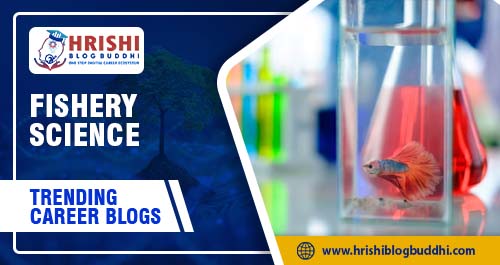
If you’re wondering how to become a Fishery Officer, you should know that Fishery Science, a dynamic branch of scientific inquiry, delves into the study, understanding, and management of fisheries. As India’s fishing sector experiences burgeoning demands, the field of fisheries science undergoes rapid development. Professionals in this domain not only address immediate challenges but also endeavor to devise long-term solutions for disease prevention and fish population conservation. This knowledge is crucial for those considering how to become a Fishery Officer.
Fishery Science encompasses a multidisciplinary approach, covering diverse areas such as fish processing, nutrition, aquaculture, disease detection in fish, fish breeding techniques, genetics, marine biology, and bioeconomics. These areas are particularly relevant for those considering how to become a Fishery Officer.
Stream | Graduation | Post-graduation | Ph.D. |
Candidates must first complete and pass a recognized class 12 exam. | Candidates must now hold a bachelor’s degree in Fishery Science, such as a B.F. Sc or B.Sc. in Aquaculture. | Candidates who want to learn more about the area might seek a postgraduate degree. | Candidates who are interested in pursuing a Ph.D. in Fishery Science can do so. |
To get into college, the candidate should aim for a score of at least 50-60%. | To get admitted into a good PG college or placement, students should strive for a high GPA. | The candidate must maintain a high GPA to get admitted to a suitable Ph.D. college or placement. | To acquire a decent job, the candidate must attempt to get a high percentage. |
Candidates now have the option of studying biology in class 12 if they so want. They will be eligible to enroll in a bachelor’s degree program after that. | They can pursue B.F.Sc. or B.Sc. in Aquaculture. After that, they can enroll in a PG course. | They can pursue M.Sc. in Fishery Science or M.Sc. in AquaCulture | They can get a Ph.D. in Fishery Science or Diploma in Industrial Aquaculture and Fisheries if they want to. |
Fishery Science Courses in India-
Undergraduate courses | Postgraduate courses | Ph.D. | Diploma Courses |
Bachelors in Fishery Sciences (B.F.Sc.) | Masters in Fishery Sciences (M.F.Sc.) | Ph.D. in Fishery Science | Diploma in Fish Products Technology |
B.Sc. (Hons) in Aquaculture | M.Sc. in Marine Biology and Fisheries | — | Diploma in Industrial Aquaculture and Fisheries |
B.Sc. Life Science | M.Sc. in AquaCulture | — | Diploma in Fisheries |
B.Sc. in Fisheries | — | — | — |
Course Highlights-
B.F.Sc.-
Course Name | Bachelor’s in Fishery Science |
Degree Level | Undergraduate |
Duration | 3 years |
Examination Type | Semester system |
Minimum Qualification | Completed class 12th with Science or biology |
Admission process | Entrance or merit-based |
Recruiting companies | Marine Product Export Development Authority (MPEDA), Coastal Aquaculture Authority of India (CAA), Fisheries Survey of India (FSI), Indian National Centre for Ocean and Information Services(INCOIS), National Institute of Oceanography(NIO). |
M.F.Sc. –
Course Name | Master of Fisheries Science |
Degree Level | Postgraduate |
Duration | 2 years |
Minimum Qualification | Bachelor of Fisheries Science (B.F.Sc.) |
Examination Type | Semester system |
Admission process | Entrance or merit-based |
Recruiting companies | Fisheries Survey of India (FSI), VA Tech Wabag GMBH, Thermax India, GE Water, Siemens water, Hindustan Dorr Oliver limited, Wog Technologies, UEM India Pvt. Ltd. |
.Ph.D. in Fishery Science-
Course Name | Ph.D. in Fishery Science |
Degree Level | Doctorate |
Duration | 3 – 4Years |
Minimum Qualification | Post-graduation in Fishery Science or M.F.Sc. |
Examination Type | Semester System |
Admission process | Based on shortlisted candidates’ performance in the round of interviews. |
College name | Location |
Lovely Professional University | Jalandhar |
Annamalai University | Tamil Nadu |
Assam Agricultural University | Assam |
Calicut University | Kolkata |
Central Institute of Fisheries Education | Chennai |
Shri Shivaji University | Maharashtra |
Andhra University | Andhra Pradesh |
Patna University | Patna |
Maharashtra Animal & Fishery Sciences University | Nagpur, Maharashtra |
Exam Name | Conducting Body | Level of Exam | Exam Mode |
GPAT (Graduate Pharmacy Aptitude Test | National Testing Agency | National Level | Online i.e. Computer-based test |
AUCET (Andhra University Common Entrance Test ) | Directorate of Admission Andhra University | State Level | Offline |
ICAR AIEEA (Indian Council of Agricultural Research All India Entrance Exam for Admission) | The National Testing Agency | National Level | Online i.e. Computer-based test |
LPU NEST (Lovely Professional University National Entrance and Scholarship Test) | Lovely Professional University | University Level | Online |
JEE Mains (Joint Entrance Exam Mains) | National testing agency (NTA) | National Level | Computer-based test |
Fisheries biologists engage in various tasks including:
Job name | Job description |
Fishery Officer | A Fishery Officer must educate the public about the importance of protecting natural ecosystems and fishery resources. They work for the government. They patrol the sea to preserve fish habitats and resources. |
Fish Farming Consultant | Fish farming consultants are in charge of fish breeding and rearing for wholesale and retail purposes. They keep track of fish stocks and make sure that the water supply is enough for the various fish species. |
Aquaculturist | Aqua Culturists are in charge of aquaculture, which includes cultivating freshwater creatures and cultured shellfish, marine finfish, and aquatic plants. |
Fishery Enforcement Officer | They are primarily responsible for monitoring rivers for illegal fishing, verifying angler licenses, capturing, measuring, inspecting, and releasing fish, as well as analyzing their health. |
Aquaculture Technician | Aquaculture technicians assist biologists in the management of public lakes, rivers, and recreational fishing areas by collaborating with government authorities. They help biologists and academic researchers maintain fish on university campuses. |
Hatchery Manager | He or she is in charge of steering the fish hatchery in the proper path as well as other fish farm-related tasks. They use new inventive talents to improve profitability, management, and production. |
Fishery Inspector | Fisheries Inspectors are in charge of managing, monitoring, and protecting farmed and wild fish stocks, as well as the lakes, rivers, and other ecosystems in which they reside. |
Research Assistant | He or she should do the duties that have been assigned to them. |
Fishery Biologist | A fisheries biologist’s job is to protect natural ecosystems and do research on fish. Some of them gather fish samples and preserve documentation on boats, ships, and cruises. |
Marine Biologist | The job of a marine biologist is to study and analyze the distribution and evolution of species and their environments in the water. |
Fishery Manager | Manager of a fishery Supervises the activity of a fishery or a poultry farm. Screening cultivation sites, monitoring fish development, maintaining tools and equipment, preparing adequate food supplies, and dispensing medicines to fish are all part of their work. |
Internships for Fishery Science Students-
An internship allows you to enter a professional setting with little or no experience and get hands-on experience in your subject of interest. A Fishery Science internship is strongly suggested. Internships have the potential to change a student’s life and career.
If you’re lucky, you could be offered a job following your internship. An outstanding intern has undergone previous training and is familiar with the firm’s processes. Some of the advantages of a Fishery Science internship include the following-
The following are some of the top hiring firms in the field of fisheries science-
Life Science and EnvironmentTrending Career Blogs...
Read MoreLife Science and EnvironmentTrending Career Blogs...
Read MoreLife Science and EnvironmentTrending Career Blogs...
Read MoreLife Science and EnvironmentTrending Career Blogs...
Read More