

EngineeringTrending Career BLOGS Introduction Skills Required...
Read More
 Skip to content
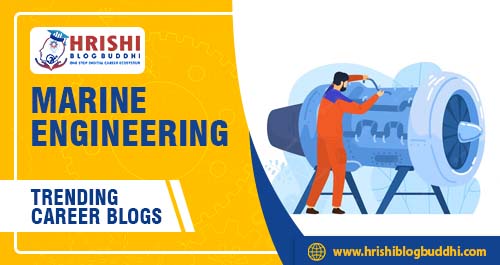
Curious about what is marine engineering and how to become a marine engineer? Delve into this specialized discipline of engineering dedicated to the design and operation of mechanical systems for seagoing vessels, ports, and harbor installations. Whether you’re aspiring to understand the qualification of marine engineer, exploring the various jobs for marine engineer, or simply curious about the dynamic intersection of marine and engineering, this guide is your compass through the fascinating world of marine engineering.
Becoming a Marine Engineer: Embarking on a career as a marine engineer involves meeting specific educational criteria. The qualification of marine engineer typically requires a bachelor’s degree. Aspiring individuals often wonder how to become a marine engineer and the associated courses of marine engineering. Engineering colleges nationwide offer comprehensive programs, leading to degrees such as BE/B.Tech and beyond.
Stream | Graduation | Post-graduation | P.hD. |
Any educational board’s 10+2 exam must be passed by the candidate. | To pursue a career in this field, the candidate must have a bachelor’s degree. | If the candidates desire, they can also pursue a master’s degree. It is not required to pursue this option. | The candidates can also pursue a Ph.D. if they so wish. It is, however, not required to do so. |
The core subjects should include Physics, Chemistry, and Mathematics (PCM). | They can study marine engineering at the B.E./ B. Tech in marine engineering. To get into a post-graduate program, try to maintain a 50-60% average. | They can pursue M.Tech, M.E in marine engineering. | They can pursue Ph.D. in marine engineering. |
The candidate should try to gain at least a minimum of 60% marks. Then, only they will become eligible for bachelor’s course | The candidate needs to pass the entrance exams like JEE, JEE advanced, IMU CET and others to get enrolled in a bachelor’s degree. | The candidate needs to pass the entrance exams like GATE and others to get enrolled in a master’s degree. | — |
Individuals in the SC/ST and disabled categories are given a more liberal minimum mark requirement of 55 %. | Individuals in the SC/ST and disabled categories are given a more liberal minimum mark requirement of 55 %. | SC/ST and disabled students have a more flexible minimum mark requirement of 55% in previous degree courses. | — |
College name | Location |
Indian Institute of Technology (IITs) | Different Locations in India |
Birla Institute of Technology (BITS) | Pilani |
National Institute of Technology (NITs) | Different Locations in India |
Vellore Institute of Technology (VIT) | Vellore |
SRM Institute of Science and Technology (SRMIST) | Chennai |
Marine Engineering and Research Institute | Kolkata |
College of Engineering | Pune |
Hindustan Institute Of Maritime Training (HIMT) | Tamil Nadu |
AMC Engineering college | Banglore |
Anna University | Chennai |
Exam Name | Conducting Body | Duration | Frequency |
JEE Mains – Joint Entrance Exam Mains | National testing agency (NTA) | 3 hours | Twice a year |
JEE Advanced- Joint Entrance Exam Advanced | Indian Institute of Technology (IITs) | 3 hours | Once a year |
GATE- Graduate Aptitude Test in Engineering | Indian Institute of Technology (IITs) | 3 hours | Once a year |
IMU CET ( Indian Maritime University Common Entrance Test) | Indian Maritime University | 3 hours | Once a year |
Exam Name | Conducting Body | Duration | Frequency |
WBJEE (West Bengal Joint Entrance Examination) | West Bengal Joint Entrance Examinations Board | 2 hours | Once a year |
UPCET (Uttar Pradesh Combined Entrance Test) | National Testing Agency (NTA) | 3 hours | Once a year |
KCET (Karnataka Common Entrance Test) | Karnataka Examinations Authority | 1 hour 30 minutes | Once a year |
AUCET (Andhra University Common Entrance Test ) | Directorate of Admission Andhra University | 1 hour 30 minutes | Once a year |
TS EAMCET (Telangana State Engineering, Agriculture and Medical Common Entrance Test) | JNTU Hyderabad | 3 hours | Once a year |
MHT CET(Maharashtra Common Entrance Test) | Maharashtra Common Entrance Test Cell | 2 hours 30 minutes | Once a year |
Exam Name | Conducting Body | Duration | Frequency |
WBJEE (West Bengal Joint Entrance Examination) | West Bengal Joint Entrance Examinations Board | 2 hours | Once a year |
UPCET (Uttar Pradesh Combined Entrance Test) | National Testing Agency (NTA) | 3 hours | Once a year |
KCET (Karnataka Common Entrance Test) | Karnataka Examinations Authority | 1 hour 30 minutes | Once a year |
AUCET (Andhra University Common Entrance Test ) | Directorate of Admission Andhra University | 1 hour 30 minutes | Once a year |
TS EAMCET (Telangana State Engineering, Agriculture and Medical Common Entrance Test) | JNTU Hyderabad | 3 hours | Once a year |
MHT CET(Maharashtra Common Entrance Test) | Maharashtra Common Entrance Test Cell | 2 hours 30 minutes | Once a year |
Graduates in marine engineering find themselves engaged in a variety of activities. Explore the diverse job profiles, from a Chief Engineer responsible for the entire marine engineering department to a design engineer creating and testing new technologies for ships. Understand the roles of a submarine designer, maintenance engineer, and port manager to get a comprehensive view of career possibilities.
Job name | Job description |
Chief engineer | In the Marine Corps, a chief engineer is a high-ranking officer. They are in charge of the vessel’s whole marine engineering department, and the maintenance and operation of all engineering equipment onboard. |
Design Engineer | For a ship, design engineers create and test new technologies and machine parts. |
Navy Personnel | After passing the Defence Services Exams, students can join the Indian Coast Guard or Indian Navy to protect the country’s seas. |
Chief Electric Tech Officer | The ship’s Electrical department is led by the Chief Electric Tech Officer. |
Chief Security Officer | A CSO oversees a ship’s seamless operation and security initiatives. |
Submarine designer | They design the structure of submarines. They develop a design as per the client’s need. |
The candidates need to pass the entrance examination to get admission to universities or colleges.
EngineeringTrending Career BLOGS Introduction Skills Required...
Read MoreEngineeringTrending Career BLOGS Introduction Skills Required...
Read MoreENGINEERING Trending Career BLOGS Introduction Skills...
Read MoreEngineeringTrending Career BLOGS Introduction Skills Required...
Read More