
Career Opportunities in Defence Trending Career...
Read More
 Skip to content
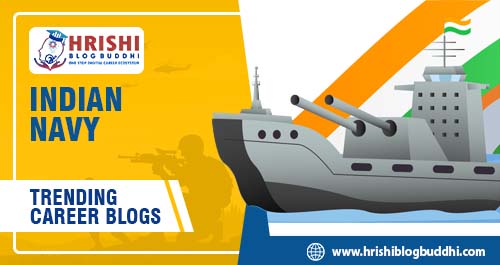
The Indian Navy, a branch of the Indian Armed Units and one of the primary forces of the Indian Army, is the world’s seventh most powerful navy. It boasts some of the most senior officers among the Navy officers, making it a prestigious institution. The Indian Navy has a wide range of responsibilities, from providing aid in the event of natural calamities to participating in wars to protect the country and defeat the enemy.
For those who aspire to become a Navy Officer, a career in the Indian Navy is both exciting and challenging. The Indian Navy not only allows us to protect our country from external dangers via water but also offers the opportunity to work with a vibrant team whose lives are inextricably tied to ships and seas. They are in charge of deterring wars and foreign intrusions, as well as protecting the country’s territorial integrity, safeguarding the coasts, and monitoring.
If you’re wondering how to become a Navy Officer in India, this blog will provide you with the necessary information and guidance.
Those interested in joining the Indian Navy or Air Force must have completed their 12th/appearing (10+2 pattern) from a recognized board or university, with Physics and Mathematics as a required subject.
The following things are checked during the physical test of a candidate
| College Name | Description |
|---|---|
| 1. Indian Naval Academy (INA), Ezhimala, Kerala | The Indian Naval Academy (INA) located in Ezhimala, Kerala, is the premier institution for training officers of the Indian Navy. It offers a comprehensive four-year Bachelor of Technology (BTech) program in Naval Architecture and Ocean Engineering. Cadets undergo rigorous academic, physical, and leadership training to develop the skills necessary for leadership roles in the Navy. The curriculum includes naval science, engineering, seamanship, and military studies, preparing graduates to serve as competent and effective Naval Officers. |
| 2. National Defence Academy (NDA), Khadakwasla, Pune | The National Defence Academy (NDA) situated in Khadakwasla, Pune, is a premier tri-service military training institution that prepares cadets for commissioning into the Indian Armed Forces, including the Navy. NDA offers a three-year training program followed by one year of specialized training at the respective service academies. Cadets undergo holistic development in academics, military training, and physical fitness, instilling leadership qualities and professional competence required for a successful career in the Navy. |
| 3. Naval Officers Training Academy (NOTA), Chennai, Tamil Nadu | The Naval Officers Training Academy (NOTA) located in Chennai, Tamil Nadu, is dedicated to training officer candidates for the Indian Navy. NOTA offers a rigorous training program focused on character development, leadership, and professional competence. Cadets undergo intensive academic studies, military training, and practical seamanship exercises to prepare for roles as commissioned officers in the Navy. NOTA instills core values of honor, courage, and commitment, shaping cadets into capable and ethical leaders ready to serve the nation at sea. |
| 4. Indian Naval Shipwright School (INSS), Visakhapatnam, Andhra Pradesh | The Indian Naval Shipwright School (INSS) situated in Visakhapatnam, Andhra Pradesh, is a premier institution for training technical officers in naval architecture and shipbuilding. INSS offers specialized courses in naval construction, marine engineering, and shipyard management. Cadets receive hands-on training in ship design, construction techniques, and project management, preparing them for roles in shipbuilding, repair, and maintenance in the Indian Navy. INSS graduates play a crucial role in ensuring the operational readiness and sustainability of naval fleets. |
| 5. Indian Naval Ship (INS) Shivaji, Lonavala, Maharashtra | Indian Naval Ship (INS) Shivaji located in Lonavala, Maharashtra, is a premier technical training establishment of the Indian Navy. It offers specialized courses in engineering disciplines such as mechanical, electrical, and marine engineering. Cadets undergo comprehensive training in engine maintenance, propulsion systems, and shipboard operations. INS Shivaji emphasizes hands-on learning and practical skill development, preparing cadets for technical roles onboard ships, submarines, and shore establishments in the Indian Navy. |
| 6. Indian Naval Maritime Academy (INMA), Mumbai, Maharashtra | The Indian Naval Maritime Academy (INMA) situated in Mumbai, Maharashtra, is a leading institution for training merchant navy officers and maritime professionals. INMA offers courses in navigation, marine engineering, maritime law, and safety management. Cadets undergo rigorous training in shipboard operations, cargo handling, and emergency response procedures. INMA collaborates with shipping companies and regulatory agencies to provide industry-relevant training and certification, preparing cadets for successful careers in the merchant navy and maritime sector. |
| 7. Naval Physical and Oceanographic Laboratory (NPOL), Kochi, Kerala | The Naval Physical and Oceanographic Laboratory (NPOL) located in Kochi, Kerala, is a premier research institution of the Indian Navy. NPOL conducts research and development in areas such as underwater acoustics, oceanography, and marine technology. Cadets have the opportunity to engage in cutting-edge research projects, technology development, and scientific experiments related to naval operations and maritime security. NPOL provides valuable insights and technical expertise to support Navy’s missions in underwater warfare, surveillance, and environmental monitoring. |
| Entrance Exam | Description |
|---|---|
| 1. National Defence Academy (NDA) Exam | The NDA exam is conducted by the Union Public Service Commission (UPSC) twice a year for admission to the National Defence Academy (NDA) and Naval Academy (NA). It is a gateway to a career as a Navy Officer where candidates undergo a rigorous selection process involving a written exam followed by interviews by the Services Selection Board (SSB). The exam tests candidates’ aptitude in mathematics, general ability, and English language. Successful candidates undergo further training at NDA Khadakwasla, followed by specialized training at the respective service academies. |
| 2. Combined Defence Services (CDS) Exam | The CDS exam is also conducted by UPSC twice a year for recruitment into the Indian Military Academy (IMA), Indian Naval Academy (INA), Air Force Academy (AFA), and Officers Training Academy (OTA). Candidates aspiring to become Navy Officers can appear for the CDS exam and choose the Indian Naval Academy (INA) as their preference. The exam consists of a written test followed by SSB interviews for shortlisted candidates. Successful candidates undergo training at INA Ezhimala to become commissioned officers in the Navy. |
| 3. Indian Navy Entrance Test (INET) | The INET is conducted by the Indian Navy for direct entry of officers in various branches including Executive, Technical, and Education branches. It is a computer-based exam that assesses candidates’ knowledge in subjects relevant to their chosen branch, along with reasoning and aptitude. Successful candidates are shortlisted for SSB interviews and medical examination. INET provides an opportunity for graduates and final-year students to join the Indian Navy as officers through direct recruitment. |
| 4. Indian Navy Sailors Recruitment Exam | The Indian Navy conducts recruitment exams for Sailors (Matric Recruits, Artificer Apprentices, and Senior Secondary Recruits) through centralized selection processes. These exams assess candidates’ eligibility, aptitude, and medical fitness for various trades in the Indian Navy. Sailors undergo basic training at Naval establishments before being assigned to operational units. The recruitment exams are conducted periodically, and candidates can apply based on eligibility criteria specified by the Indian Navy. |
| 5. Naval Architecture and Ocean Engineering Entrance Exam | Various institutes and universities in India conduct entrance exams for admission to Bachelor of Technology (BTech) programs in Naval Architecture and Ocean Engineering. These exams assess candidates’ aptitude in mathematics, physics, and engineering concepts. Students who aspire to pursue a career in ship design, marine engineering, or naval construction can appear for these exams to gain admission to reputed institutes offering specialized courses in naval architecture and ocean engineering. |
| 6. Indian Coast Guard Navik Exam | The Indian Coast Guard conducts recruitment exams for Navik (General Duty), Navik (Domestic Branch), and Yantrik posts. These exams assess candidates’ eligibility, aptitude, and physical fitness for recruitment into the Indian Coast Guard. Navik (General Duty) and Navik (Domestic Branch) are entry-level positions for sailors in the Indian Coast Guard, while Yantrik is a technical branch for mechanical, electrical, and electronics trades. Candidates undergo basic training before joining operational units of the Indian Coast Guard. |
| 7. University Entrance Exams | Several universities offering NCC (Naval Wing) programs or courses related to defense studies may conduct their entrance exams for admission to undergraduate or postgraduate programs. These exams assess candidates’ academic knowledge, aptitude, and fitness for pursuing a career in defense-related fields. Candidates interested in joining the Navy through university programs can appear for these exams to gain admission to institutes offering specialized courses relevant to naval careers |
| Job Profile | Description |
|---|---|
| 1. Naval Aviator | Naval Aviators are responsible for piloting aircraft in the Navy’s aviation operations. They undergo extensive flight training and may specialize in various aircraft types such as fighter jets, helicopters, or maritime patrol planes. Naval Aviators perform reconnaissance missions, air-to-air combat, air support for ground troops, and aerial refueling. They must demonstrate exceptional flying skills, decision-making abilities, and situational awareness to ensure mission success and safety. |
| 2. Surface Warfare Officer | Surface Warfare Officers (SWOs) are responsible for commanding and operating surface ships such as destroyers, cruisers, and amphibious assault ships. They oversee navigation, weapons systems, communications, and personnel management onboard the vessel. SWOs lead teams in various operational tasks including maritime security, search and rescue operations, humanitarian assistance, and anti-submarine warfare. They require strong leadership, tactical expertise, and the ability to adapt to dynamic maritime environments. |
| 3. Submarine Officer | Submarine Officers are tasked with commanding and operating submarines, which are critical assets for underwater warfare and intelligence gathering. They oversee submarine navigation, sonar systems, weapons deployment, and crew management in confined and challenging underwater conditions. Submarine Officers conduct stealthy missions for reconnaissance, surveillance, and deterrence against potential threats. They must possess strong leadership, technical proficiency, and the ability to manage resources effectively in a submerged environment. |
| 4. Naval Intelligence Officer | Naval Intelligence Officers gather, analyze, and disseminate intelligence to support naval operations and decision-making processes. They collect information from various sources, including satellite imagery, signals intelligence, human intelligence, and open-source data. Naval Intelligence Officers assess the capabilities and intentions of adversaries, identify potential threats, and provide strategic insights to commanders. They collaborate with other intelligence agencies and utilize advanced analytical tools to produce actionable intelligence for mission planning and execution. |
| 5. Navy Nurse Corps Officer | Navy Nurse Corps Officers provide healthcare services to Navy personnel and their families in both peacetime and combat situations. They work in diverse healthcare settings such as hospitals, clinics, ships, and expeditionary medical facilities. Navy Nurse Corps Officers deliver preventive care, diagnose illnesses, administer treatments, and support medical evacuation operations. They play a crucial role in maintaining the health and readiness of Navy forces, promoting wellness initiatives, and responding to medical emergencies during deployments and humanitarian missions. |
Career Opportunities in Defence Trending Career...
Read MoreCareer Opportunities in Defence Trending Career...
Read MoreCareer Opportunities in Defence Trending Career...
Read More