

Healthcare SectorSkill India Sector Blogs Introduction...
Read MoreHealthcare Sector
Skill India Sector Blogs
Share this post
Introduction
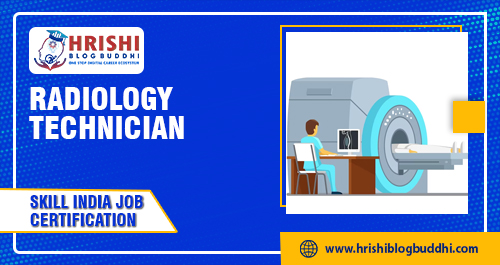
If you’re wondering how to become a radiology technician, this article will guide you through the process. The radiology technician is responsible for preparing patients and equipment for radiological treatments, as well as performing tests and maintaining equipment. Radiology technicians not only collect x-rays but also develop them and provide them to medical specialists who may act on the information.
After graduating from high school, aspiring radiology technicians should enroll in a technical or vocational school. MRI Technicians, CT Technicians, and Mammography Technicians, for example, may specialize in a certain radiographic method. Strong technical abilities, as well as solid interpersonal skills while interacting with patients, are required for success as a radiology technician. So, if you’re interested in how to become a radiology technician, keep reading for more information.
Roles and Responsibilities
Roles & Responsibilotites
- They must collect and evaluate a patient's medical history before diagnosing the issues.
- During imaging processes, technicians keep an eye on patients to ensure their safety.
- They appropriately prepare patients for all of the processes involved in a radiological test by adequately educating and preparing them.
- Technicians Ascertain that the radiography equipment is appropriately positioned above the relevant body portion of the patient, at the suitable angle and height.
- They must also guarantee that all radiological equipment is sanitized and cleaned in preparation for future usage.
- Radiology technicians record pictures of wounded or sick parts of a patient using both fixed and moveable x-ray imaging devices.
- They must also develop and create appropriate radiopharmaceuticals to contrast the diagnosis's subsequent pictures.
- Patients' records are also kept by technicians. The complete patient treatment procedure is usually included in this.
- They might be in charge of the entire radiology department.
Education and Training
- An associate's or bachelor's degree in radiography or radiologic technology is necessary.
- A student can complete class 12 with a biology subject from a recognized board. Get your B.Sc. in Radiology after that. After that, you can pursue a master's degree in radiotherapy. After that, you can continue your education with a Ph.D. for another 4-5 years.
- If you don't want to get a bachelor's degree, you can get a Radiology Diploma.
- The radiologist should be certified in the use of X-ray and MRI machines.
Skill and Abilities
- Candidates should be able to communicate well and work well with others. This is required to adequately explain treatment methods to patients.
- The ability to handle, operate, and maintain all radiographic testing and diagnosing equipment is required.
- They can maintain their temper even in conditions that would ordinarily cause fear.
- Technicians must always pay close attention to the smallest of details.
- They should be familiar with BLS, CT scans, X-rays, measuring bone density and vital signs, fluoroscopy, and other relevant procedures.
- They should be able to stand for extended periods and handle heavy machines without help.
- To handle serious problems in a short amount of time, technicians need to have outstanding and swift analytical and decision-making skills.
- They must adhere to all safety procedures and use protective equipment at all times.
Work Environment
Hospitals, outpatient care facilities, doctors’ offices, and medical centers are among the most popular places where radiology technologists work. Radiology technologists operate in clinical and hospital settings, and some work shifts during the day, nights, and even overnight.Â
A typical day is 8 hours long, although many radiologic technicians may be required to work longer shifts. A radiologic technician may be called to assess a patient in an emergency circumstance, such as an injury.
Salary
- An entry-level Radiology Technician with less than one year of experience may expect to earn a total salary of ₹360,000. This includes tips, bonuses, and overtime pay.
- The typical total income for a Radiology Technician in their early career with 1-4 years of experience is ₹304,100.
- The average total pay of ₹400,000 is earned by a mid-career Radiology Technician with 5-9 years of experience.
Conclusion
The career of a radiology technician is one that many people are interested in. For the work that they accomplish, radiology technicians are well compensated. It’s a fantastic career decision in and of itself, but it also has a lot of room for growth.Â
A radiology technician’s job is critical in ensuring that the patient is treated correctly the first time around. Working in this industry isn’t tough at all. You may quickly obtain a radiology technician certificate and begin working as one.
FAQs
Q1: What does a radiology technician do?
Q2: How can I become a radiology technician after high school?
Q3: Can I specialize in a certain radiographic method as a radiology technician?
Q4: What skills are required for success as a radiology technician?
Q5: How can I start my journey to become a radiology technician?
Do I need to renew my license?
Wait. What is WordPress?
How long do I get support?
Do I need to renew my license?
Didn't find the right info?? Looking for a specific topics??
Explore Career Opportunities
The Complete Guide on How to
Healthcare SectorSkill India Sector Blogs Introduction...
Read MoreGuide on How to become radiology

Healthcare SectorSkill India Sector Blogs Introduction...
Read MoreThe Complete Guide on How to
Healthcare SectorSkill India Sector Blogs Introduction...
Read More